On Grief
There have been two clear seasons in my adult life when I lost too many precious things too close to each other. The pain of those losses piled on top of each other and suffocated me in a way I wasn’t sure I would survive.
In my most recent season of grief, I have felt like a walking country song. I lost my marriage, my therapy dog, a close friendship, my car died, and myriad other compounded tragedies.
In these seasons of overwhelming pain, our survival brain kicks in and says, “How am I going to endure this?” But I propose, dear reader, that grief isn’t something we simply survive, but something we can use to make meaning in our lives. We can let it sharpen our edges or we can allow it to soften them.
Grief, loss, death—these things don’t care who you are. They are the great equalizer. It doesn’t matter how hard you work or how much money you have or how diligent you’ve been to avoid self-imposed hardship. Grief is a human condition. I should know: not only have I experienced my own, but my job is to help others walk the painful road through grief. I’ve seen all the aspects of grief and the different nuanced experiences that complicate it.
I’ve learned that it is important to grieve the things that did happen as much as the things that didn’t. I’ve grieved the loss of family members as well as the moments in my life that I never got to share with them after they passed. I’ve grieved the story of my life that I lived right alongside the pain of not living the life that I had hoped to live.
The privilege of walking alongside others as they grieve means that I am invited to witness the pain and highlight the unexpected beauty. I’ve seen firsthand the truth in this statement attributed to Elisabeth Kubler-Ross:
“You will grieve forever. You will not ‘get over’ the loss of a loved one [or pet or thing]; you will learn to live with it.”
A common framework of grief includes denial, anger, bargaining, depression, and acceptance. But even this can suggest grief has a clear beginning and end. It does not.
Perhaps that is the hardest part: releasing our expectation of an ending. We hope and crave and bargain for grief to be over, but the goal is not to get over it. The goal is to learn to live with it.
Grief often feels like suffering because it manifests in our bodies much like other pain.
C. S. Lewis wrote, “No one ever told me that grief felt so like fear. I am not afraid, but the sensation is like being afraid. The same fluttering in the stomach, the same restlessness, the yawning. I keep on swallowing.”
What he describes sounds a lot like anxiety. Many of us know that emotional suffering well—and still hate it.
Learning to live with grief is like caring for a feral stray cat. At first, it is guarded and unwelcome. But with time and consistency, it becomes a companion. It may still have claws, but it teaches you patience, gentleness, and sacrifice. You are still yourself, but you move through the world differently: softer, stronger, and more compassionate because of the weight you have learned to carry.
We may never make sense of grief, pain, or trauma. But we can make meaning from them. Pain is evidence that life still exists—and that it is still worth living.
A Christian Perspective:
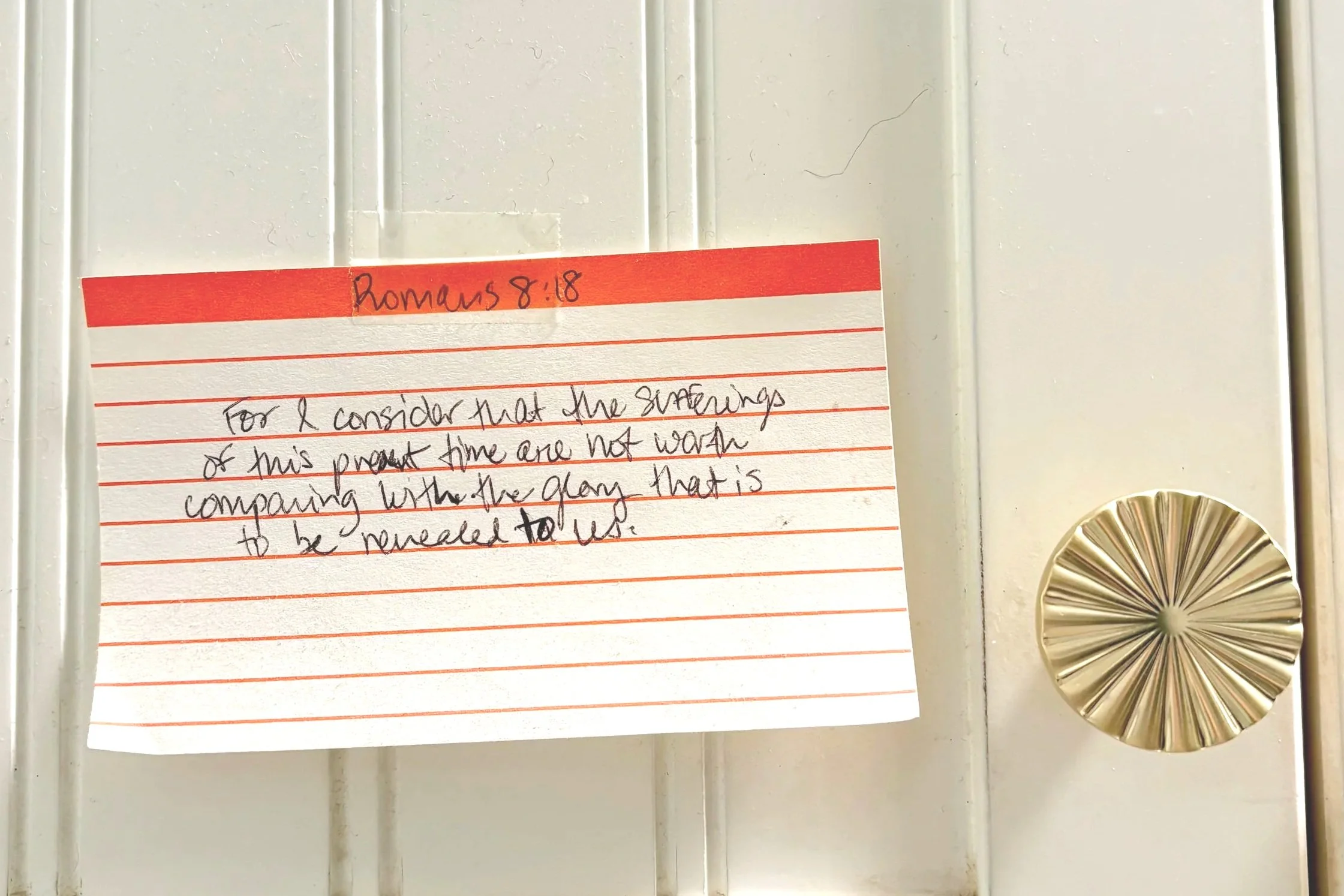
In Christianity, we believe that there is great beauty in suffering because it affords us the opportunity to become more like Christ, who suffered to bring reconciliation and redemption. The apostle Paul says in Romans 8:18, “For I consider that the sufferings of this present time are not worth comparing with the glory that is to be revealed to us.”
I have had this verse written on an index card taped to my bathroom cabinet for over six years. It is a verse I have wrestled with and been comforted by.
If you are familiar with the Bible, you know that Romans 8 is a glorious chapter full of encouragement, where Paul doesn’t just name the deeply human experiences that we have on this earth but contrasts them with what we are afforded in new life with Christ. Suffering [i.e. grief] is not minimized, ignored, or patronized in Scripture. It is addressed directly and both validated and honored.
The shortest verse in the Bible is “Jesus wept” (John 11:35).
Why did Jesus weep? He was grieving the loss of Lazarus, a friend he loved. And here is the most compelling part to me: Jesus already knew he was going to resurrect Lazarus.
In that moment, when he arrived on the scene, he witnessed his grieving friends and felt the loss himself. He entered into that grief alongside them, all the while knowing restoration was coming. He didn’t rush past the grief knowing there was joy on the other side of it. He waded into the stream of despair, loss, fear, and pain and, in doing so, he honored the grief.
Is this not beautiful? The God who raises dead people to life saw value in grieving something before he restored it. If Jesus saw even a temporary loss, however great, as worthy of the attention grief deserves, then how much more worthy are our losses that are permanent?
Jesus doesn’t just make space for grief but blesses those who experience it. He taught in his Sermon on the Mount:
Matthew 5:4: “Blessed are those who mourn, for they will be comforted.”
And so we mourn with hope because we know our suffering is not worth comparing with the glory that is to be revealed to us.
Grief is a form of suffering—not an obstacle to overcome, but a sorrow through which Christ helps us make meaning. It is not suffering that redeems us, but Christ, who meets us within it.